Wednesday, 21 March 2012

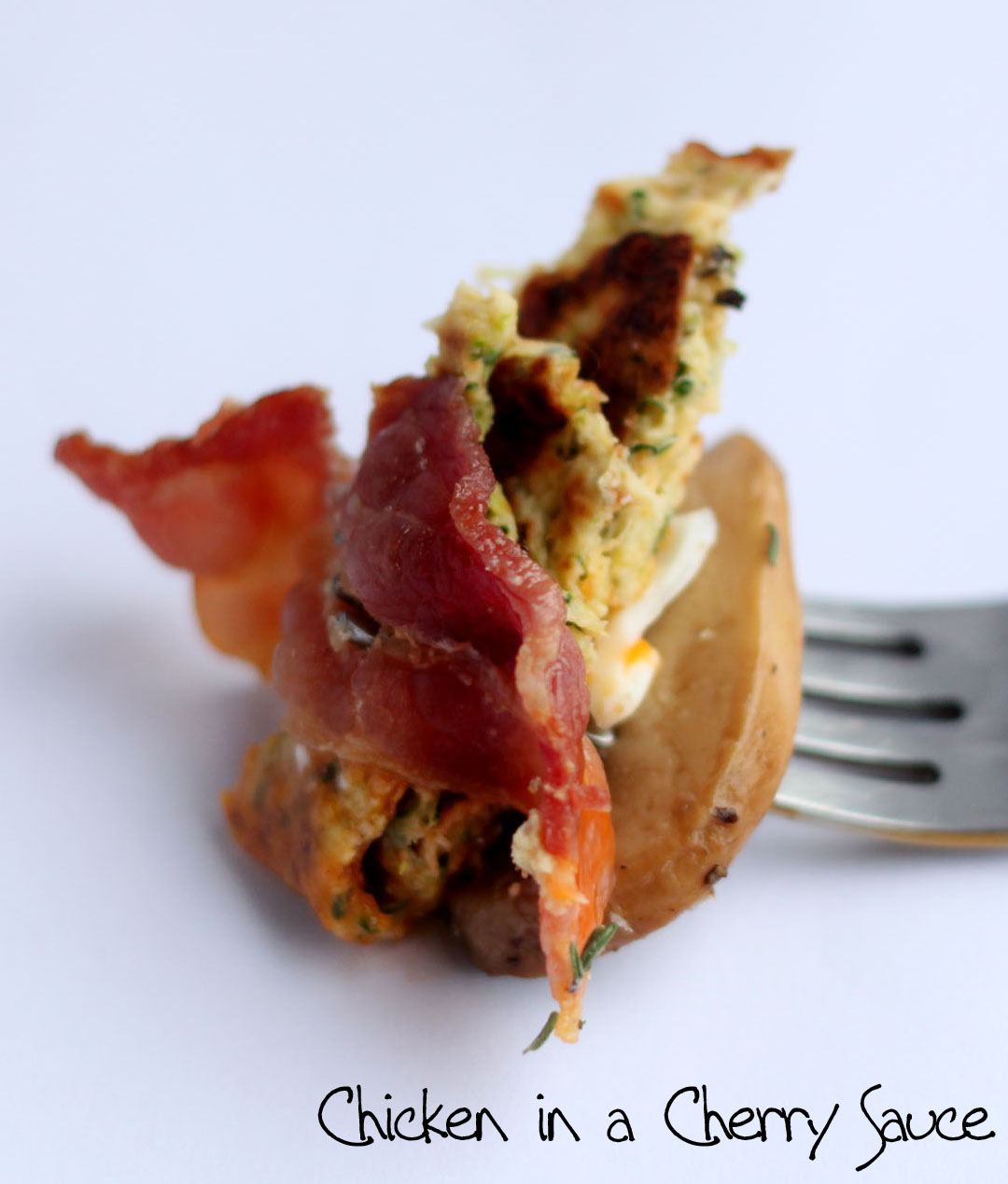
Crispy Microwaved Bacon and a Cling Film Poached Egg


Dear readers,

No one believes me when I tell them that one can make crispy bacon in a microwave. Most people think that it won't become crisp. I didn't believe it either when I first heard of the idea. Now that I've seen it with my own eyes, I never cook my bacon any other way. I have the same feeling about the genius idea of cling film poached eggs.

Poached eggs are my favourite type of egg, as I have mentioned previously in my San Francisco Brunch post. However, I am usually put off of making them because the art of poaching an egg is so difficult to conquer, especially when the eggs aren't fresh. This all changed when someone shared the cling film method with me. It was given to me by one of my housemates, and I believe that she first heard of it from one of Jamie Oliver's shows. It is practically fool-proof (I say practically because one of my housemates managed to fail due to his impatience!) and provides an evenly-cooked white with a runny yolk, and no mess or egg soup!

Microwaved crispy bacon:

Place the strips of bacon onto 2 pieces of kitchen roll (to soak up the excess fat) on a plate and place in the microwave. Cook on high for 2 minutes. Turn the bacon strips over and cook for a further minute. For crispier bacon strips, cook further in intervals of 30 seconds.

Note: The bacon strips usually turn out a little dryer than if they were grilled or fried, however, I believe this to be healthier since more fat has been removed during the cooking process.

Cling film poached eggs:

Place a large square of cling film over and onto a shallow cup or mug and push down the centre of the cling film to make space for the egg. Crack an egg into the cling film and then bring the edges together and twist to seal the egg into a package. Poach as normal, i.e. in a pan of boiling water, covering the egg entirely, for four minutes. Carefully remove the cling film and serve.

Note: This cooking time is for a large egg at room temperature (~20°C). If the egg has been stored in the fridge, cook for five minutes. The result is an evenly cooked white with a runny yolk. I don't usually grease the cling film first, but lining with butter or oil can make the removal of the poached egg from the cling film a little easier.

I ate my microwaved bacon and poached egg with a zucchini pancake and some garlic-fried mushrooms.
Has anyone else tried these kitchen tricks?

Thursday, 9 February 2012

Chocolate Argentine Alfajores for Valentine's Day

Dear readers,

I wanted to make a tasty treat to post to my boyfriend (in Argentina) for Valentine's Day. I posted him some of the Argentine Thumbprint Cookies that I made back in October and he absolutely loved them, as well as the idea of them being homemade and travelling so far. I decided that the Valentine's treat had to be heart-shaped and it had to be something small and light for the post. The Argentine Thumbprint Cookies were adapted from the traditional Argentine Alfajores (shortbread cookies sandwiched with dulce de leche and dusted with desiccated coconut), so I decided to make a Valentine's version of alfajores!

I used the same recipe for the shortbread that I used for the Argentine Thumbprint Cookies (55g sugar creamed with 125g of butter with 180g plain flour), but substituted 20g of the flour for some cocoa powder to make them dark and chocolately. Shortbread is so simple to make and so delicious that is has become a favourite of mine!

I rolled the shortbread dough (I ended up using an empty wine bottle as this student house seems to be a lacking rolling pin, as well as nutmeg, which I mentioned in my previous post!) and used a heart-shaped pastry cutter to cut out some hearts that were around 3mm thick. I then baked them at 180°C for around 10-12 minutes. After they had cooled, I sandwiched them with dulce de leche and rolled the edges in desiccated coconut.

I can only hope that they make it safely through the post and arrive on time!

Thursday, 2 February 2012

Simple Gratin Dauphinois

Dear readers,

I hope that you are all keeping yourselves warm this winter! Yesterday, as I was walking home from university, I had a sudden craving for Gratin Dauphinois. I used to make this dish all the time when I was a child, due to it's simplicity. As a student, half of my diet consists of potatoes. I am well known for eating "mountains of mash" on the side of every meal and so I decided to do something different with some of the potatoes from the 5kg bag that I purchase on every shopping trip!


Fortunately, I had some parmesan in the fridge. I find that this beauty goes with almost everything, especially everything potato.


Apart from the parmesan and some milk, my fridge was pretty bare. So this gratin really is simple. It consists of layers of sliced potatoes, softened onions and parmesan, with some milk, salt and pepper. This house does have paprika but, in the end, I forgot to add it! It would have been better with cream instead of milk, but what wouldn't be better with cream?! This version, however, still satisfied my craving nicely.


This recipe is very adaptable. One could add whatever cheese one wished, and mushrooms to the layers (or any vegetable for that matter). I would have loved to add some nutmeg, but that is something that this student house is lacking!


P.S. Sorry (again!) for the delayed posting. I have, actually, been experimenting in the kitchen, but I've experienced a couple of failures! Please stay tuned!

Tuesday, 10 January 2012

Argentine Yule Log

A cross-section of the Yule log

Dear readers,

Happy New Year! I apologise for posting this after Christmas, however, I know that there are a few people who celebrate Christmas later than others, for one reason or another. Also, my friends and I like to share a "Fake Christmas" some time early in the New Year. Therefore, this recipe may still be useful at this time of year!

When I was in Argentina, I really wanted to share something English at Christmas, and combine both the English and Argentine cultures in one dessert.

The outside of the Yule log

The idea came into my head... why not make a chocolate Yule log, but use dulce de leche as the filling in order to make it Argentine?!

So, my boyfriend and I went ahead and baked a Yule log. We really struggled to find cocoa in the shops of Buenos Aires, and so decided to keep the sponge coffee flavoured. This worked well because the sickly-sweet dulce de leche was "calmed down" (slightly) by the bitterness of the coffee. We also added coffee to the icing to make it truly mocha.

We used a standard Yule log recipe but substituted the cocoa in the sponge for some instant coffee, and used the filling of dulce de leche and a mocha butter icing. We didn't have the best cooking tray for the sponge so it ended up slightly squidgy and slightly burnt, too. Fortunately, although it sank a little, the dulce de leche covered up any burnt flavours and we didn't receive any complaints!

Dulce de leche oozing out of a slice of the Yule log

We served this at the big dinner on Christmas Eve (Christmas is mainly celebrated on Christmas Eve in Argentina) and it was a great success! It was so well received that the family demanded more for the larger celebrations for New Year. We decided to create a double-sized Yule log (AKA a Yule tree) for the New Year Celebrations. I hope you all enjoyed the holidays!

Wednesday, 28 December 2011

Afternoon Tea at L'Orangerie, Buenos Aires

Vase of roses at the table

Dear readers,

Feliz Navidad
[Merry Christmas] from Buenos Aires, Argentina!

Sorry for disappearing for another month, but I have been exploring Buenos Aires trying to find some great food places to share with you all!

Alvear Blend Tea being poured

It may seem a little strange that I went somewhere so English when I am on the other side of the world. I have enjoyed a fair share of Argentine culture here, but I really wanted my boyfriend to experience a little bit of English culture. It's going be a long time before he is able to visit England so I thought that Afternoon Tea at L'Orangerie, Alvear Palace Hotel, would be the perfect way to introduce him to English culture, here in Argentina. I was also curious to see Argentina's version of "Afternoon Tea"!

Kir Royales served at the table

We were fortunate enough to be seated in the beautiful Garden Courtyard. We certainly felt that we were in London. We ate minimal food before our booking, in order to prepare ourselves for the great feast of cakes. Afternoon Tea in Argentina is served between 5-7pm as opposed to 2-5pm in England, so we were desperately hungry by the time we arrived.

Teapot handle mitts

The waiters first served us the Kir Royales which they poured at the table. We ordered the Alvear Blend tea which had flavours of almond, citrus and rose. The waiters poured the tea at the table and the teapots had tiny handle mitts - adorable! I had never seen these before.

Warm pear scones with lemon curd, raspberry jam and orange marmalade

We were given freshly baked pear scones that were still warm, with lemon curd, raspberry jam and orange marmalade (but no butter). Before we came, I read a few reviews about Afternoon Tea at L'Orangerie. They said that the scones here were horrible. We thought, however, that the scones were delicious. They were dense but broke apart easily and had a subtle chewiness and fruitness from the pieces of pear. We didn't leave a crumb!

Plant decoration in the Garden Courtyard

We then started on the collection of sandwiches and cakes. The top plate included a mini salmon bagel, Spanish ham and pear roll, mushroom bun and a ham and cheese roll.

Tea cakes and sandwiches

The second plate included sandwiches of cream cheese and cucumber, turkey and pesto, tuna salad and Spanish ham. I enjoyed most of these, however, two of them were soggy with something that was not part of the filling. I left these uneaten!

The bottom plate included a selection of cakes including a chocolate and pistachio cake, a small round chocolate cake, a mini strawberry pavlova, triple chocolate mousse cake and a nutty-cinnamon pastry similar to baklava.

Struggling to finish the cakes!

We ate everything except for the couple of soggy sandwiches and the last course of cakes which one choose from a cart. We chose a black forest cake and a chocolate mousse cake which we took home in a box.

I felt like a little girl at a tea party. Except for the soggy sandwiches and the lack of butter or cream with the scones, it was the perfect afternoon tea! (The plain round chocolate cake could have been made a little more exciting, too.) I have been to Fortnum & Mason's in London for afternoon tea, and the Alvear definitely beat them in both the service and the quality of the food. I was very impressed that they served the Kir Royales at the table and also thoroughly explained every part of the menu as they served the food.

It may not be an Argentine thing to do here, but, actually, it is mainly Argentines who indulge in Afternoon Tea at L'Orangerie as the tourists are, usually, busy spending their time doing all of the "Argentine" things.

And, finally, despite the excellence of this experience, it was not that expensive. For two people including a glass of sparkling wine (or a Kir Royale), it came to AR$300 (around £50). A few days before this, we ate at a Mexican restaurant for the same money and were fairly disappointed with the food. I would definitely prefer to have the Alvear experience instead!

If you ever have the opportunity to Buenos Aires, I highly recommend that you partake of Argentina's brilliant interpretation of "English Afternoon Tea"!

Christmas Tree in The Alvear Hotel

Sunday, 27 November 2011

Carrot and Ginger Soup

As a student, I am always looking for recipes that are delicious, cheap and healthy, all at the same time. I recently came across this recipe for Carrot and Ginger Soup from Sainsbury's and it has become my latest addiction.

When I first made this I was overwhelmed by the fact that such a simple dish could be so delicious. The warmth of the ginger is perfect for this bitter November chill, here in Northern England.

I simply sautéed some onions, then added half a kilo of chopped carrots and 2 tablespoons of finely chopped ginger with some stock. After boiling for about 30 minutes, I added some butter, honey and seasoning and then, blended.

Despite the ultimate deliciousness of this dish, I love to make food look a little bit more interesting. I have decided to dress the soup with a drizzle of cream, a sprinkle of paprika and a few sprigs of fresh thyme. I always try to avoid using dried herbs to dress a dish, they really cannot compete with the fresh!


P.S. Again, thank you for your patience. This final year of university is eating up much of my time. Please stay tuned to this blog as I shall be jetting of (again!) to somewhere far away and I am hoping to share many of my photos and food experiences with you all!

Friday, 28 October 2011

Argentine Thumbprint Cookies

Argentine Thumbprint Cookie broken in half

Recently, I have become a keen drinker of Mate. Despite the fact that Mate suppresses the appetite, I always enjoy a sweet accompaniment, just as I do with my tea and coffee. Argentines are famous for their love of intense flavours and their love of dulce de leche, as I mentioned in a previous post. They drink their Mate very bitter. I drink Mate differently from the Latin Americans, with more water and much less yerba, in order to accommodate my sensitive palate.

Yerba Mate

I have always thought that 'thumbprint cookies' were cute. I had a browse on the internet and found that there are not many thumbprint cookies with dulce de leche. Argentine alfajores (which I sampled in Barcelona) generally consist of two shortbread cookies joined together with a filling of dulce de leche and dusted with desiccated coconut. I decided to transfer this idea into thumbprint cookies (as they are just adorable).

Argentine Thumbprint Cookies before cooking

I followed a shortbread recipe that I found on the internet which called for equal parts of butter and flour. The dough felt extremely oily so I added in some more flour before I shaped the cookies. Unfortunately, the cookies turned out a lot bigger and less 'adorable' than I had anticipated/hoped for.

Argentine Thumbprint Cookies

I tried again and this time managed to burn them. They were still worthy of being eaten, but definitely not worthy for the blog.

Dulce de leche centre

So, I tried for a third time and finally I had success! I creamed 125g of butter with 55g of sugar. I then mixed in 180g of flour and shaped the dough into small balls. I coated the balls with desiccated coconut, placed them onto a baking tray and pushed my thumb into the centre to create 'bowls' for the dulce de leche. After baking them until they were golden brown (around 10 minutes at 180°C), I filled the thumbprints with dulce de leche and added an extra dusting of coconut. They were small, cute and very tasty.

Argentine Thumbprint Cookie

Is anyone else, out there, a Mate drinker?