Tuesday, 12 June 2012

Torta Rogel


Dear readers,

Torta Rogel is an authentic Argentine recipe. It consists of layers of crispy pastry sandwiched between glossy dulce de leche and is topped with Swiss meringue.

When I was in Argentina I made this cake with one of my Argentine friends. She gave me a 1kg pot of dulce de leche to take home to make this dessert for my English friends and family.

Many people make Torta Rogel using the same dough as empanadas or they use pre-made empanada discs that I mentioned in my Empanada post. This is such a simple dessert that I didn't want to take any shortcuts. I don't think that England sells empanada discs, anyway! I researched many different recipes, in both Spanish and English, and combined them to create my own.


Torta Rogel

Pastry
4 egg yolks
260g plain flour
100g butter
50ml water

Filling
400g dulce de leche

Swiss meringue

4 egg whites
100g icing sugar

Mix the butter and flour together until a breadcrumb-like texture is formed. Add the egg yolks and water and mix to form a dough. Divide the dough into walnut-sized balls, wrap them in cling-film and then leave them to rest in the fridge for 1 hour.

Roll out the dough balls on a floured surface to a thickness of ~0.5mm. Place the sheets on a baking tray and prick the pastry all over with a fork. Bake the sheets at 180
°C for ~5 minutes until they are lightly golden brown.

Sandwich 7 or 8 baked pastry sheets with spoonfuls of dulce de leche. It may be useful to heat the dulce de leche slightly to soften it and make it easier to spread.

Lightly whisk the sugar and egg whites over a low heat. As the mixture warms, whisk harder until stiff peaks are formed. Place the meringue into a piping bag and pipe little peaks of meringue on the top pastry sheet.


Notes:

This recipe makes 38 walnut-sized dough balls which, in turn, makes 5 cakes. I decided to make 1 cake and several "rogelitos" (mini-cakes) by dividing each pastry ball into 5 smaller balls to make smaller pastry sheets. If one wishes to make one cake, I recommend quartering this recipe.

Although this recipe is simple, the rolling out of the pastry sheets and cooking them tray by tray does take some time. These are best eaten fresh, however, they can be stored for a few days and heated up for a few minutes in the oven before serving.

En Español:
Torta Rogel

Masa
4 yemas
260g harina
100g manteca
50ml agua

Relleno
400g dulce de leche

Merengue suizo

4 claras
100g azúcar impalpable

Mezclar la manteca y la harina juntos hasta conseguir una textura como de miga de pan se forma. A
ñadir las yemas y el agua y mezclar hasta formar una masa. Separar la masa en bolas del tamaño de una nuez, envolverlas en film transparente y dejar a descansar en la heladera durante 1 hora.

Estirar entonces las bolas de masa sobre una superficie enharinada hasta un espesor de 0,5mm. Colocar las hojas en una bandeja de horno y se pincha la masa por todas partes con un tenedor. Hornear las hojas a 180°C durante aproximadamente 5 minutos hasta que estén ligeramente doradas.

Intercalar las hojas con cucharadas de dulce de leche.

Batir las claras y el azúcar impalpable suavemente calentando en fuego bajo. Cuando esté caliente, batir mas fuerte hasta que este dura a punto de merengue. Rellenar una manga de decoración con el merengue y formar picos encima de las hojas con dulce de leche.

Notas:
Esta receta hace 38 bolas de masa, que hacen 5 tortas.
Me decidí a hacer una torta y varios "rogelitos", dividiendo cada bola en 5 bolas más pequeñas para hacer pequeñas hojas.

Aunque esta receta es simple, el estirar y cocinar de las hojas requiere mucho tiempo. Estas tortas se comen mejor frescas, sin embargo, pueden almacenar durante unos pocos dias y se calientan durante unos pocos minutos en el horno antes de servir.

The pastry is very crumbly and delicate. The idea is for the pastry to crack as one adds the layers together and the sticky dulce de leche to act as a glue holding each layer in place.

The Swiss meringue is quite different from normal meringue since it holds a mousse-like texture. If one prefers, the meringue can be hardened on a low heat in the oven for 30 minutes or so. The cakes will survive a low temperature in the oven.

Slice like a normal cake and enjoy!


Monday, 28 May 2012

Blueberry, Thyme and Feta Salad

Dear readers,

I am truly sorry for disappearing again. My final few weeks of university (ever!) occupied a great deal of my time. I have now completed my four-year degree and it's time for me to enter the real world!

I have lots of blog ideas in the pipeline and waiting to be used once I have the free time. This dish is very simple, but I thought that it would be better to post a simple recipe rather than none at all.


I love shopping in the supermarkets in the evening - I always manage to grab so many bargains. One of the recent bargains that I picked up was a large box of fresh blueberries for 50p! I had some feta cheese in the fridge and I also decided to buy some fresh thyme. I simply threw these three ingredients together to create a beautiful, simple and tasty salad that is perfect for these glorious sunshine-filled days that we have here in England.

Blueberry, Thyme and Feta Salad
40g diced feta cheese
50g blueberries
20 sprigs fresh thyme
Drizzle of balsamic vinegar

Mix all the ingredients together and serve as a starter, side or snack.

I hope to be back soon now that my studies are complete. Thank you for being so patient, my lovely readers. Please stay tuned!

Saturday, 7 April 2012

Empanadas with Chicken in a Cherry Sauce to Celebrate the 2nd Birthday of my Blog!

The inside of a chicken in a cherry sauce empanada

Dear readers,

I wanted to make a dish with chicken and a cherry sauce to celebrate the second birthday of Chicken in a Cherry Sauce. I am in Argentina so what better idea is there to make other than one of the most abundant foods in the country - empanadas (similar to Cornish pasties) with chicken in a cherry sauce?!

Chicken in a cherry sauce empanadas

It seems that cherries are extremely scarce in Buenos Aires. My boyfriend and I searched all over the city for something cherry. In all of the main supermarkets, there were no cherry jams or cherry preserves, no dried cherries… just nothing!

Chicken in a cherry sauce empanadas

After much time searching, we finally found a small jar of cherries in syrup in a tiny corner shop. These weren’t ideal for a savoury cherry dish, but at least they were cherries! I then realised that we needed some sort of jam to thicken the sauce. I adapted this cherry sauce recipe from Delia’s sour cherry sauce that she accompanies with roast duck (I made this a few years back and it was fabulous). Clever novio [boyfriend] found a jar of cherry preserve in another tiny store that his grandmother had recommended. Perfecto!

The inside of a chicken in a cherry sauce empanada

As I researched empanada recipes on the internet beforehand, I was shocked to find that almost all of the recipes used shop-bought empanada pastry discs. I’m pretty sure that England does not sell these, and I didn’t want to cheat. I was definitely going to make my own dough. I roughly followed this recipe by Laylita; however, I found the dough to be very tough and difficult to handle. I made another batch with a lot more water and the dough was perfect.

Chicken in a cherry sauce empanada

As I read in many empanada blog posts, they really are time consuming to make. But I also read that they are totally worth it – and they definitely were. I couldn’t live with myself knowing that I’d cheated with pre-made empanada discs!

This recipe makes 15 empanadas.

Empanada dough (modified from Laylita's recipe):

500g plain flour
150g butter
1 large egg
½ teaspoon salt
~250ml water
1 egg for glazing the empanadas

Chicken in a cherry sauce:

2 chicken breasts
10-15 cherries (preferably fresh, but jarred/tinned are sufficient)
½ bottle red wine
1 jar of cherry preserve or jam
1 teaspoon thyme

Method

Empanada dough: Mix together the flour, salt and butter in a large bowl
using a spoon until a breadcrumb-like texture is formed. Mix in the egg and water to form a dough. Separate the dough into two balls. Wrap the dough balls in cling film and place in the fridge to rest for approximately 30 minutes.

Chicken in a cherry sauce: Bake the chicken breasts on a greased baking tray for 25 minutes at 200
°C. Slice the cherries in half. Add the wine, cherries, thyme and preserve/jam to a saucepan and simmer on a low heat for approximately 30 minutes, stirring occasionally until the wine has reduced and a thick sauce is achieved. Slice the chicken into small cubes and combine with the cherry sauce.

Filling the empanadas: Take the dough from the fridge and place on a lightly floured surface. Roll out the pastry
to a thickness of ~2mm using a lightly floured rolling pin. Use a round 10cm diameter pastry cutter or cut around a small plate to make the empanada discs.

Place a heaped tablespoon full of the filling into the centre of the disc. Brush the edges of the disc with a little egg to glue the edges together. Fold over the pastry to create a semi circle and press down the edges to seal the empanada.

Pinch the edge of the pastry with two fingers and fold over. Continue this action with the rest of the empanada. (It takes a couple of empanadas to get the hang of it! This short video shows the folding technique.) One may prefer to crimp the edges using a fork instead. Brush the empanadas with egg before placing on a greased baking tray and bake at 200
°C for 25 minutes, or, until they are golden brown.

Note: I ended up using a clean sock to brush the empanadas with the egg, as I didn't have a pastry brush. It worked very well!

Meat empandas

We decided to make some traditional meat empanadas, too.

Meat empanadas

Meat filling:

500g minced beef
3 hard boiled eggs chopped into pieces
1 large finely chopped onion
1 large chopped red pepper
50g raisins
50g sliced olives
2 tablespoons oil
1 teaspoon each of oregano, rosemary and thyme (or whichever herbs you prefer!)

Meat filling: Fry the onions, meat and herbs in a saucepan with the oil until the meat is cooked through. Add the pepper and raisins and cook for a further 15 minutes on a low heat. After cooking, mix in the olives and eggs.

The folded edges of the meat empanadas

We both preferred the chicken and cherry sauce empanadas, yet still enjoyed the meat ones, too. The folding of the edges can be tedious, but I think they look just beautiful (even more so after baking). Practice makes perfect! They also provide a nice crunch in contrast to the rest of the empanada.

The inside of a meat empanada

Meat empanadas

Happy 2nd Birthday to Chicken in a Cherry Sauce!

Life has, indeed, become busier since the 1st birthday of Chicken in a Cherry Sauce and, as a result, it has been difficult to keep up with regular blog posts. Blogging has helped me a great deal with my professional, as well as my social (by all you fellow bloggers!) and indeed my life in the world of food. I absolutely adore blogging about food and I'm very much looking forward to another year of it. Thank you, so much, to all of my readers. Every comment about my blog, whether online or in person, always brings a huge smile to my face and a great deal of happiness! Thanks to all of the beautiful food blogs out there that have inspired me - I can honestly say that I spend more time on food blogs than any other site on the internet! Please continue your great support, it is truly appreciated.

Tuesday, 3 April 2012

El Submarino

Dear readers,

I am back in the southern hemisphere experiencing pleasant autumnal sunshine, similar to that of a good day in the British summer.

Submarino is a popular beverage that appears on the menu of every café that sits on every corner of Buenos Aires. Submarino simply translates to English as "submarine". The simple name is perfect for such a beverage as it consists purely of hot milk and a piece of dark chocolate, which is sometimes shaped into a submarine. One submerges the chocolate into the hot milk and stirs as the chocolate melts and mixes with the milk to form an Argentine version of hot chocolate.

During my trip last December, I never sampled the Submarino due to the extreme heat and humidity. However, as the season has entered early autumn, the weather is becoming cooler. South of the capital, at a beach town called Pinamar, the windy coastline provides the perfect setting to sample this beverage.

Despite my love for dark chocolate, I was disappointed with this drink. I think that the name and the idea of creating the hot chocolate at the table are more interesting than the drink itself. Perhaps the milk wasn't hot enough to create a smooth consistency, or maybe there was too much milk for the small piece of chocolate. It was lost. The chocolate merely provided a grainy mouth-feel to the milk. I am surprised that such a simple drink, without the addition of sugar, is so abundant on the menus of a country with such a sweet tooth!

However much my palate prefers less-sweet desserts, I can't help but imagine that this drink would be better with the addition of a little something sweet, such as honey, sugar or even dulce de leche, or, maybe, all it needs is a little more chocolate...

Wednesday, 21 March 2012

Crispy Microwaved Bacon and a Cling Film Poached Egg


Dear readers,

No one believes me when I tell them that one can make crispy bacon in a microwave. Most people think that it won't become crisp. I didn't believe it either when I first heard of the idea. Now that I've seen it with my own eyes, I never cook my bacon any other way. I have the same feeling about the genius idea of cling film poached eggs.

Poached eggs are my favourite type of egg, as I have mentioned previously in my San Francisco Brunch post. However, I am usually put off of making them because the art of poaching an egg is so difficult to conquer, especially when the eggs aren't fresh. This all changed when someone shared the cling film method with me. It was given to me by one of my housemates, and I believe that she first heard of it from one of Jamie Oliver's shows. It is practically fool-proof (I say practically because one of my housemates managed to fail due to his impatience!) and provides an evenly-cooked white with a runny yolk, and no mess or egg soup!

Microwaved crispy bacon:

Place the strips of bacon onto 2 pieces of kitchen roll (to soak up the excess fat) on a plate and place in the microwave. Cook on high for 2 minutes. Turn the bacon strips over and cook for a further minute. For crispier bacon strips, cook further in intervals of 30 seconds.

Note: The bacon strips usually turn out a little dryer than if they were grilled or fried, however, I believe this to be healthier since more fat has been removed during the cooking process.

Cling film poached eggs:

Place a large square of cling film over and onto a shallow cup or mug and push down the centre of the cling film to make space for the egg. Crack an egg into the cling film and then bring the edges together and twist to seal the egg into a package. Poach as normal, i.e. in a pan of boiling water, covering the egg entirely, for four minutes. Carefully remove the cling film and serve.

Note: This cooking time is for a large egg at room temperature (~20°C). If the egg has been stored in the fridge, cook for five minutes. The result is an evenly cooked white with a runny yolk. I don't usually grease the cling film first, but lining with butter or oil can make the removal of the poached egg from the cling film a little easier.

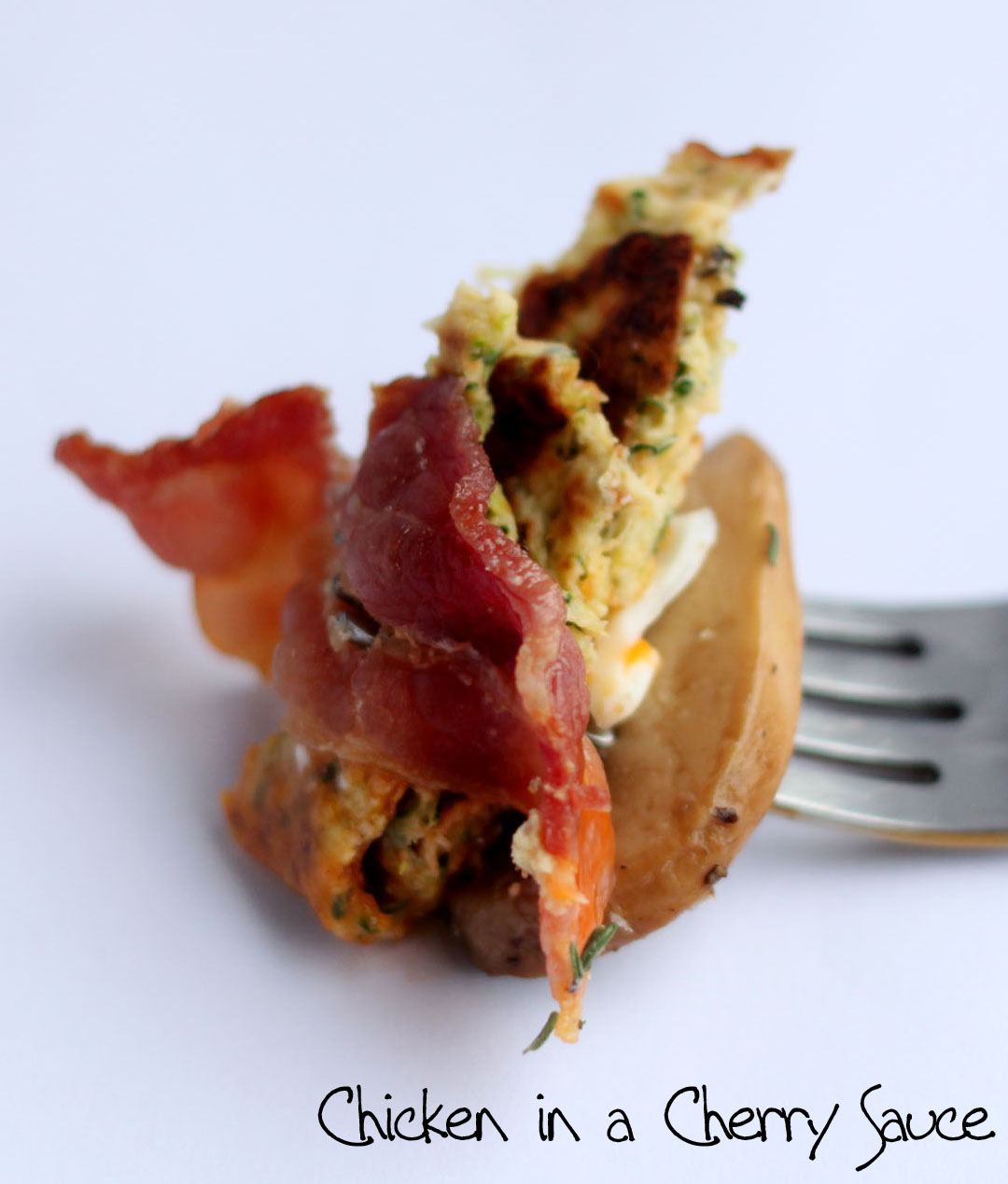
I ate my microwaved bacon and poached egg with a zucchini pancake and some garlic-fried mushrooms.

Has anyone else tried these kitchen tricks?

Thursday, 9 February 2012

Chocolate Argentine Alfajores for Valentine's Day

Dear readers,

I wanted to make a tasty treat to post to my boyfriend (in Argentina) for Valentine's Day. I posted him some of the Argentine Thumbprint Cookies that I made back in October and he absolutely loved them, as well as the idea of them being homemade and travelling so far. I decided that the Valentine's treat had to be heart-shaped and it had to be something small and light for the post. The Argentine Thumbprint Cookies were adapted from the traditional Argentine Alfajores (shortbread cookies sandwiched with dulce de leche and dusted with desiccated coconut), so I decided to make a Valentine's version of alfajores!

I used the same recipe for the shortbread that I used for the Argentine Thumbprint Cookies (55g sugar creamed with 125g of butter with 180g plain flour), but substituted 20g of the flour for some cocoa powder to make them dark and chocolately. Shortbread is so simple to make and so delicious that is has become a favourite of mine!

I rolled the shortbread dough (I ended up using an empty wine bottle as this student house seems to be a lacking rolling pin, as well as nutmeg, which I mentioned in my previous post!) and used a heart-shaped pastry cutter to cut out some hearts that were around 3mm thick. I then baked them at 180°C for around 10-12 minutes. After they had cooled, I sandwiched them with dulce de leche and rolled the edges in desiccated coconut.

I can only hope that they make it safely through the post and arrive on time!

Thursday, 2 February 2012

Simple Gratin Dauphinois

Dear readers,

I hope that you are all keeping yourselves warm this winter! Yesterday, as I was walking home from university, I had a sudden craving for Gratin Dauphinois. I used to make this dish all the time when I was a child, due to it's simplicity. As a student, half of my diet consists of potatoes. I am well known for eating "mountains of mash" on the side of every meal and so I decided to do something different with some of the potatoes from the 5kg bag that I purchase on every shopping trip!


Fortunately, I had some parmesan in the fridge. I find that this beauty goes with almost everything, especially everything potato.


Apart from the parmesan and some milk, my fridge was pretty bare. So this gratin really is simple. It consists of layers of sliced potatoes, softened onions and parmesan, with some milk, salt and pepper. This house does have paprika but, in the end, I forgot to add it! It would have been better with cream instead of milk, but what wouldn't be better with cream?! This version, however, still satisfied my craving nicely.


This recipe is very adaptable. One could add whatever cheese one wished, and mushrooms to the layers (or any vegetable for that matter). I would have loved to add some nutmeg, but that is something that this student house is lacking!


P.S. Sorry (again!) for the delayed posting. I have, actually, been experimenting in the kitchen, but I've experienced a couple of failures! Please stay tuned!